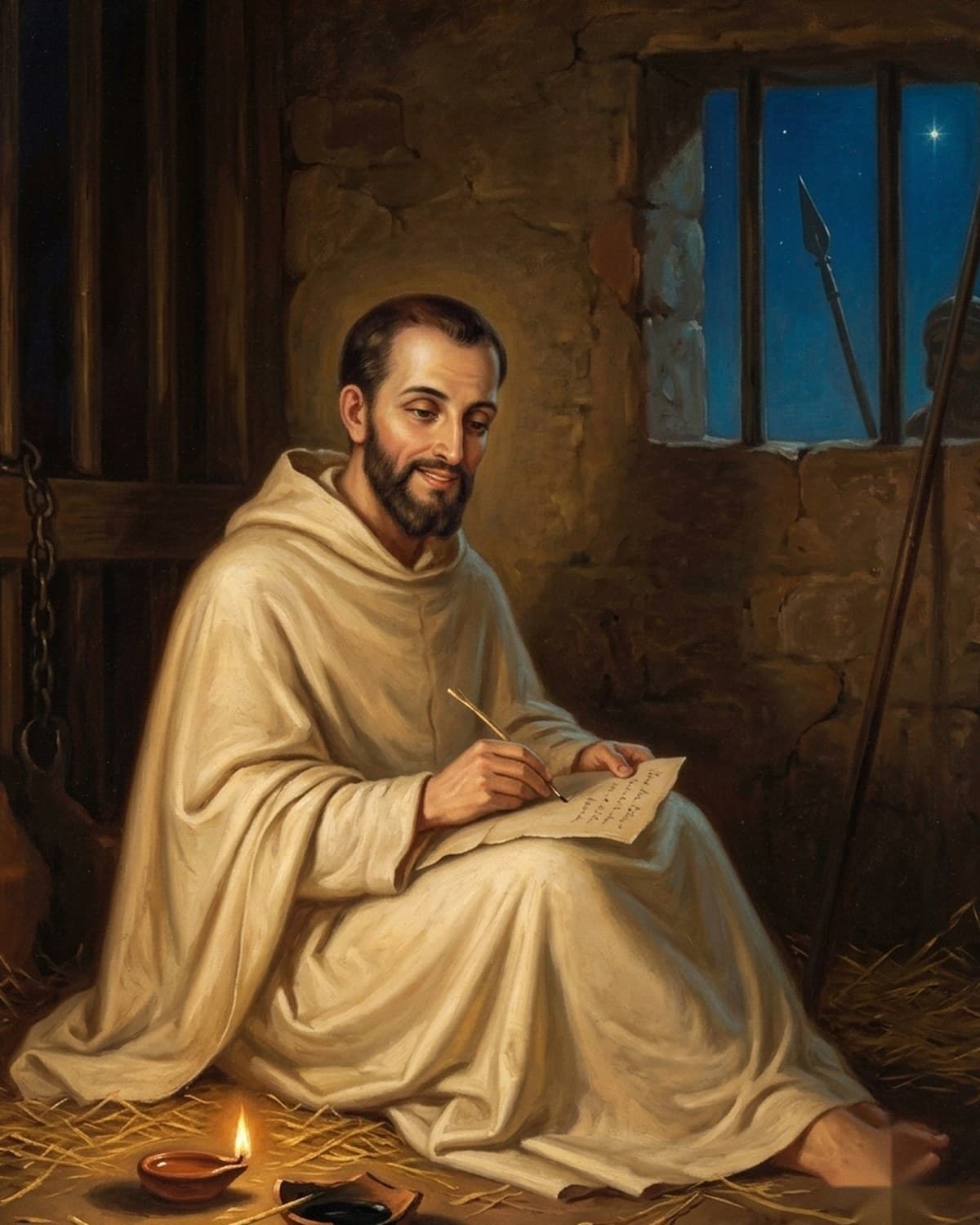
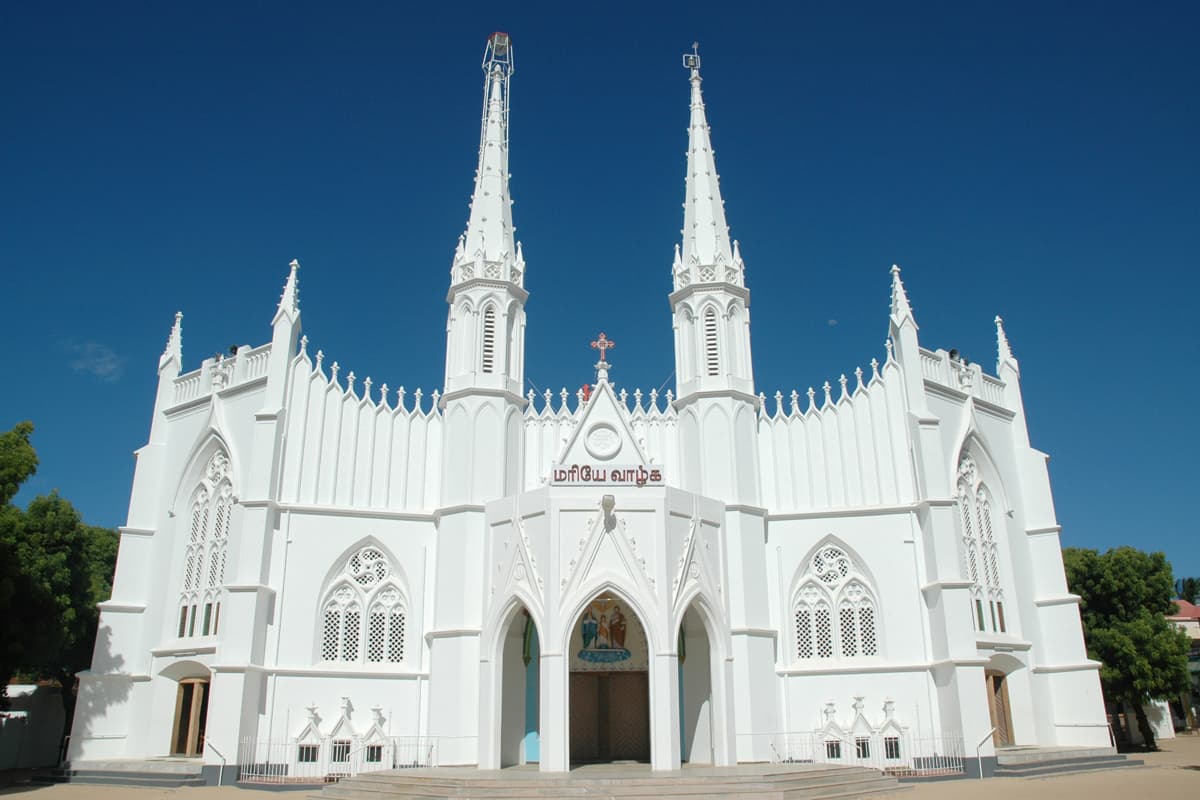
The Portuguese Jesuit who reached this village on horseback in the years when the whole Madurai Mission was in his charge, and whom Vadakkankulam has remembered ever since as the founder of its first chapel. He was beheaded for the faith at Oriyur on 4 February 1693, and to the Tamil Church he is Arulanandar.
Arulanandar — “the joy of grace”
Feast — 4 FebruaryCanonised 1947 by Pope Pius XII
In Tamil
Arulanandar (அருளானந்தர்) — “the joy of grace”
Born
1 March 1647, Lisbon — into a noble house of the Portuguese court
Society of Jesus
Entered 1662, aged fifteen; studied at Coimbra
Sailed for India
March 1673; Goa that September, the Madurai Mission from 1674
The mission in his charge
Succeeded to the charge of the Madura Mission in 1683; Superior of the Mission, 1685–86
At Vadakkankulam
The first chapel, 1685 — by the parish's own tradition
Arrested
8 January 1693; tried and condemned on the 28th; brought to Oriyur on the 31st
Martyred
4 February 1693 at Oriyur, aged forty-five — nineteen years in the mission
Raised to the altars
Beatified 21 August 1853 by Pius IX; canonised 22 June 1947 by Pius XII
On the twenty-eighth of January I was tried and condemned to be shot… I await death, and I await it impatiently. The whole crime of which I am accused is teaching the law of the true God and taking from the idols their worshippers. How glorious to suffer and to die for such a crime!
From the prison of Oriyur, 3 February 1693 — written the night before his death to the superior of the mission, with a straw for a pen and powdered charcoal for ink
His Life
From a Palace in Lisbon to a Stake at Oriyur
Forty-five years, nineteen of them in the Tamil country. What follows is told from the books, and each chapter says what it rests on.
01
A Nobleman of Lisbon
João de Brito was born in Lisbon on 1 March 1647, into a noble house of the Portuguese court; his father had been a viceroy of Brazil, and the boy was raised in the palace as a companion of the future King Pedro II. At fifteen he laid aside everything that world had promised him and entered the Society of Jesus. He studied at Coimbra and asked for the Indies — the hardest and most distant field the Society then had. He sailed in March 1673, reached Goa that September, and by 1674 was in the Madurai Mission.
Seventy years earlier Roberto de Nobili had found every door in Madurai shut against a European, and had opened them by ceasing to look like one. De Britto took the same road. He put off European dress and European food, ate no meat, went on foot from village to village as a pandaraswami — a wandering ascetic — and was known by a Tamil name rather than a Portuguese one. It carried the Gospel into country where a foreigner in foreign clothes could not have gone at all.
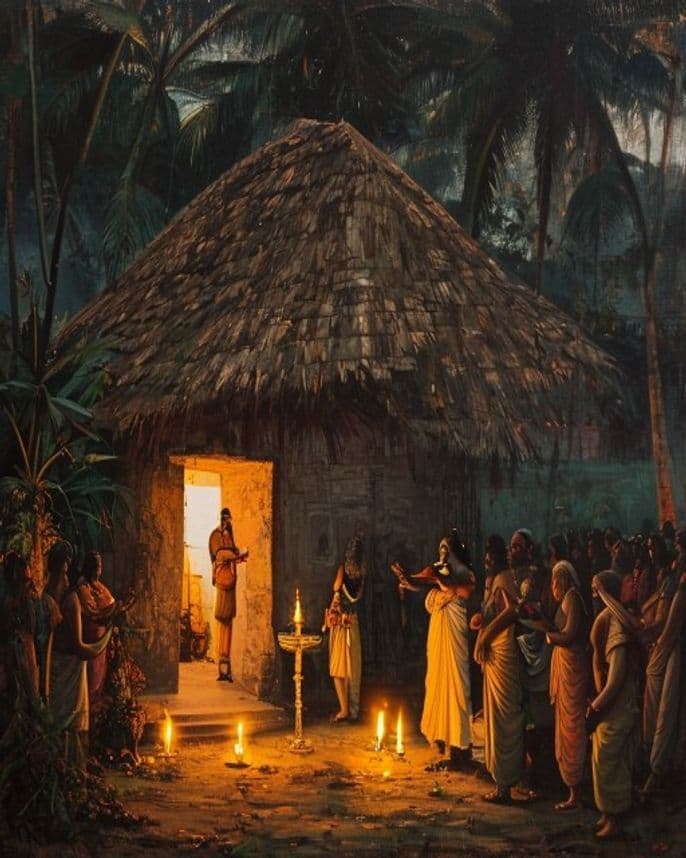
“In 1683 Father John de Britto succeeded to the charge of the Madura Mission.” The sentence is not the parish's; it is the district gazetteer's, written by a British civil servant with no interest in this village. Two years later he was made Superior of the Mission outright. Those were the years he spent in the Marava forests, building churches “between the two borders of Muni and Marava, where the peoples of both states could come to be instructed” — and, where there was no church, raising an altar in the open country under a hut of branches.
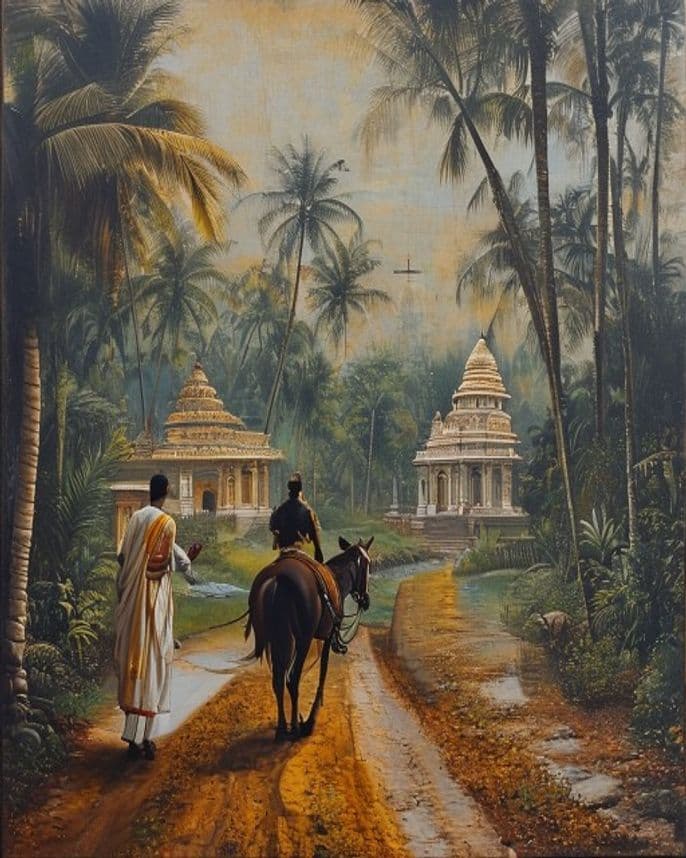
This village stood on the old road between Travancore and the Pandiyan country — a convenient halting place for anyone travelling either way, which is exactly why the mission would later put a house here. About 1680 a Christian woman named Santhaayi Ammaiyar had settled in the forest and raised a small roadside cross in the open ground facing her door. The parish's memory is that she was out gathering cotton when a priest came riding by; that she ran to him and asked him to bless her house and her cross; and that he stopped his horse and did. Pate's gazetteer, which owes this parish nothing, records that Fr de Britto “had penetrated as far south as Vadakkankulam.” The cotton field, the horse and the blessing are the village's own memory.
NoteThe parish's own history offers an alternative and does not hide it: the priest on the road may have been Fr Ignatius da Costa, who would have travelled this way from Malabar to the Fishery Coast. Both readings are kept.
More families came, and the cross by Santhaayi's door could no longer hold them. By 1685 there was a church here — a small thing of thatch. That much is not the parish remembering itself: Hardgrave, writing the social history of the Nadar community, states it flatly — “a church was built in 1685” — and both Pate and Bishop Neill attest a congregation formed here by that year. Whose hands raised it is the harder question, and the honest answer is below.
NoteNo source of the period names the chapel's dedication. The Holy Family title is documented here from the church of 1752, which Besse says was dedicated “just like the first”.
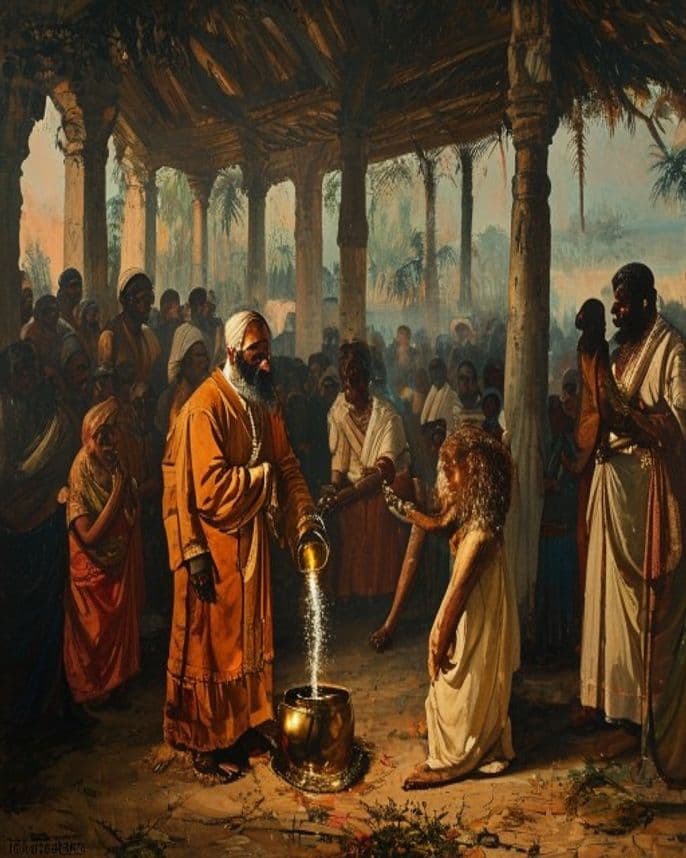
The parish remembers about two hundred baptisms — the first Christians the village ever had, men, women and children brought to the water together. The diocese's own account says “more than 200 people in 1686”, and Bishop Stephen's jubilee message has him come, baptise and build in that year. No book outside the parish's own family carries the number, and we do not pretend otherwise. It is, at least, a modest figure for this man: his biographer counted two thousand seven hundred catechumens baptised in a single stretch of two months.
NoteThe parish sources put the baptisms in 1685, “on the same occasion” as the chapel; the diocese and Bishop Stephen date them to 1686 and describe a return. The page holds both and asserts neither.
In 1686 he went into the Marava and baptised thousands in a few months. Then he was seized with his catechists, beaten, left for dead and expelled; and in 1687 the mission sent him back to Portugal as its procurator. The court that received him — the king he had grown up beside — pressed him to stay, and offered him what a man of his birth could expect. He refused it. He asked instead to be returned to his Tamil Christians, knowing quite well what that would cost, sailed again in 1690, and was back at his mission by 1691.
He was seized on 8 January 1693. On the twenty-eighth he was tried and condemned to be shot; on the thirty-first he was brought to Oriyur, where sentence was to be carried out. All three dates come from the man himself — he set them down in the letter he wrote on his last night, and it is the reason this part of the story needs no corroboration at all.
The governor Murugappa Pillai pronounced the sentence; a soldier named Perumal, famous for his bravery and his ferocity, carried it out. His hands and his feet were struck off and the body fixed to a stake so that no Christian could carry it away — and for three nights, it was said, a light stood over the place, and even the Dutch Calvinists of the coast reported it. The relics were gathered to the superior Francisco Laínez, sent to Pondicherry and on to the Jesuit college at Goa. He was, writes Boero, “forty-five years of age… and nineteen years in the Madurai Mission”. Four years later a Latin martyrology printed at Antwerp fixed the date in its very title: killed in hatred of the faith, the fourth day of February 1693.
NoteFaber says the ink of the prison letter was powdered charcoal moistened with his own spittle; Auguste Jean says charcoal diluted in water. The page follows Faber. Both are printed mission historians and neither is parish-side — a genuine conflict, kept in the register.
The King of Portugal obtained from the Raja of Marava the ground where he had died, and had a small church built on it. By 1736 the Bishop of Mylapore was writing to Pope Clement XII that every Wednesday a great multitude went out to the place of the martyrdom; that the Raja had given leave for a church there and supplied most of the materials; and that it had been “erected and dedicated to the Most Blessed Virgin”. Perumal, who had beheaded him, was among the pilgrims — he became a Christian. In the months after the death Laínez baptised fourteen thousand. A martyr's ground that turns into a Marian shrine with a weekly pilgrimage is a pattern this parish would live out, in its own way, a century later.
Pius IX beatified him on 21 August 1853; the Roman life by Giuseppe Boero, still one of the fullest accounts of his death, was written for that year. Pius XII canonised him on 22 June 1947, six weeks before India became independent. His feast is kept on 4 February, the day he died — in Rome, across the Tamil country, and in this village.
NoteThe two papal acts are the public record of the Church rather than a finding of this project's books, all but one of which were printed before 1947.
This shrine cites its sources, and it will not dress a tradition as a document. Here is exactly what stands behind the story above — including the part that does not stand on anything but memory.
Documented
What outside witnesses establish
That a church was built at Vadakkankulam in 1685, and that a congregation was formed here by that year. That de Britto succeeded to the charge of the Madura Mission in 1683 and penetrated as far south as this village. That he was condemned, imprisoned at Oriyur and beheaded on 4 February 1693 — attested by his own letter of the night before, by a Latin martyrology printed at Antwerp four years later, and by the Roman life written for his beatification.
Parish tradition
What is the parish's own memory
That the priest Santhaayi met on the forest road was de Britto. That he raised the chapel himself and dedicated it to the Holy Family. That about two hundred were baptised. Besse, the mission's own historian, would not assert it either: the missionary who built the church in the new village, he wrote, “is said to be no other than Fr John de Britto, and the year 1685.” He then drew his own line — “here tradition is met with historic documents” — and produced the Annual Letter of 1701.
Parish tradition
What the books do not say
No biography of de Britto names this village — not Faber, not Boero, not the 1854 abridgement — and his own prison letter never mentions it; Oriyur is two hundred kilometres north of here. One modern scholar attributes the establishment of the Vadakkankulam church mainly to the catechist Chidambaram Pillai, baptised here as Gnanaprakasam. And the fabric of the village's first stone church is documented to other hands entirely: Fr Buttari laid its foundations and Fr Thomassini completed it in 1752.
None of that unmakes the devotion; it places it. Vadakkankulam's claim on Arulanandar is a claim of memory and of unbroken veneration — and the village has never needed a document in order to keep his feast.
Our Parish Bond
Why This Shrine Calls Him Its Founder
St John de Britto is honoured across the Tamil land. At Vadakkankulam he is honoured as the beginning — the priest the village believes stopped his horse for one woman's cross, and from whom it counts everything that came after.
01
The first church, 1685
A church of thatch stood here in 1685; the parish has always named him as the one who raised it. Every building since has stood on that ground, and the parish counts its age from that year.
02
From a hut of branches to Little Rome
An unbroken line runs from the thatch to Fr Buttari's brick church of 1752, to the great two-nave church blessed in 1872, to the shrine proclaimed in 1993. Four churches on one piece of ground — and his is the first of them.
03
The name the village uses
Nobody here says “de Britto”. He is Arulanandar, as he was to the catechists who gave evidence at the Roman inquiry of 1695 — the Tamil name he took when he put off his own.
04
Kept, not merely remembered
His feast on 4 February is one of the fixed days of the parish year, his grotto stands in the shrine grounds, and two of the village's anbiyams — the small communities the parish is divided into — carry his name.
In This Parish
Arulanandar Today
He is not a figure the parish reads about. He is a place you can walk to on any evening of the year.
The grotto in the shrine grounds
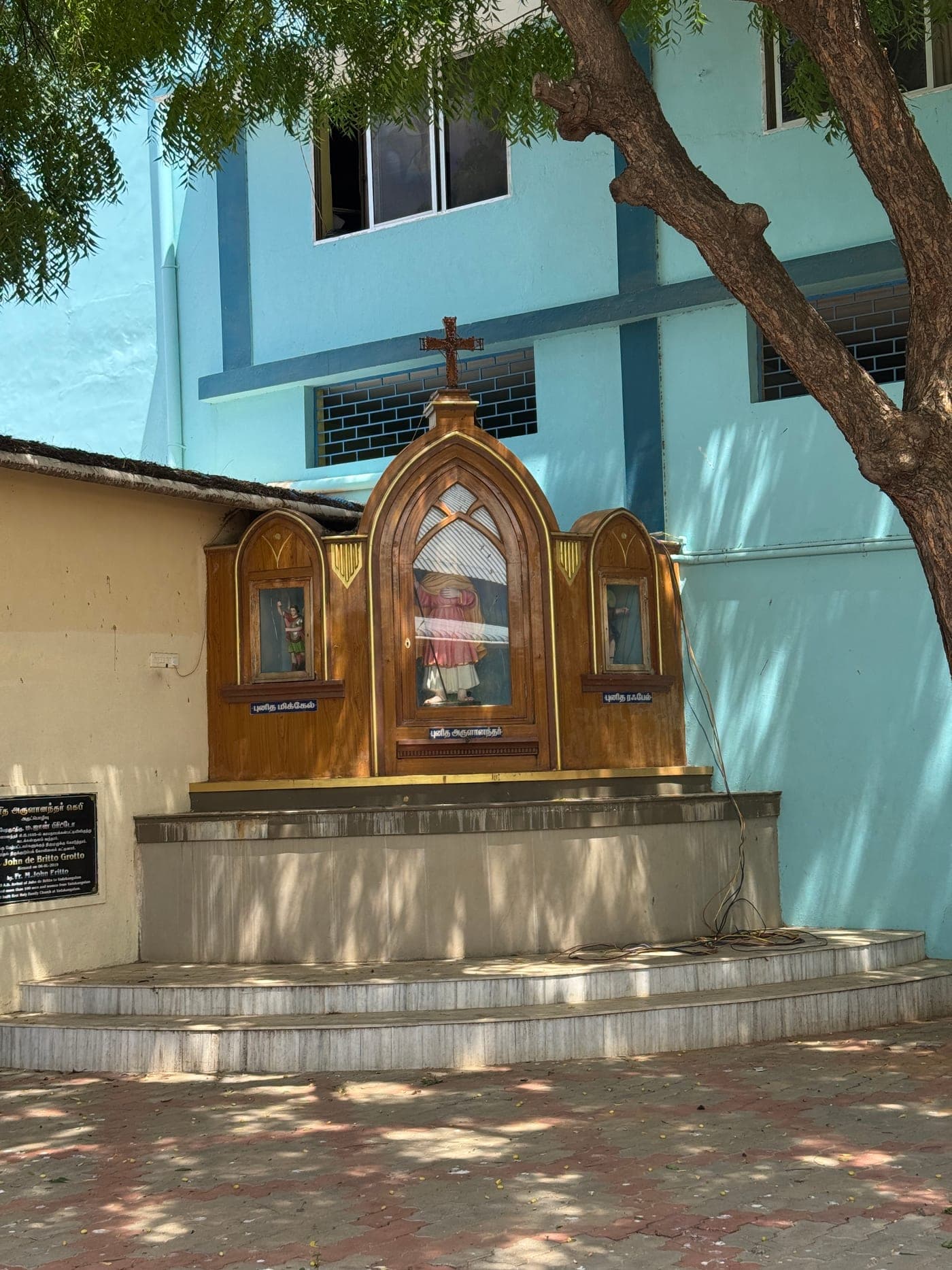
A wooden Gothic shrine under a neem tree holds his statue, flanked by St Michael and St Raphael. It was consecrated on 6 August 2019 — the opening day of the ten-day Assumption feast — and the neighbouring families built it with the parish.
Beside St Devasahayam in the Calvary chapel
In the Calvary chapel of the Apparition shrine his statue stands beside St Devasahayam's — the man who founded the place and the man baptised in it. Both were set up under Fr Thadeus Rajan, parish priest from 2013 to 2018, who kept the First Saturday devotion there.
His feast, 4 February
The parish keeps the martyr's day every February, one of the fixed feasts of a calendar that runs from St Sebastian in January to the ten-day Perunkoor of the Assumption in August.
Sources
This page is built from the saint's own letter from the prison of Oriyur (3 February 1693); the earliest printed martyrology of his death (Antwerp, 1697); the Roman life written for his beatification by Giuseppe Boero, S.J. (1853); F. W. Faber's English life (London, 1851); Joseph Bertrand's La Mission du Maduré; the Madras District Gazetteer of Tinnevelly (1917); Bishop Stephen Neill and Robert Hardgrave; Besse's history of the mission in the parish's own English typescript; and the parish's own records. Each chapter above names the witnesses it rests on. Every one of them is listed in full on the Sources page.